With this post, I'm going to get into a medical procedure (surgery) which reconfigures a person's genitals. I'm going to include links to pictures and discuss body parts graphically (in a clinical manner. If you're squeamish or don't really want to see this, please skip this post; it's ok, I understand.
What’s in a name? – Part 2
When we left off, I had just been granted a legal name change by the court system, and I thought I'd made it through the hard part. I was so wrong! Compared to updating my name everywhere else that it is used, the legal system was a breeze!
What’s in a name? – Part 1
I recently had my name legally changed. For such a simple thing, a lot had to happen. Here's the basic process...
Misconceptions about trans people
There are a lot of misconceptions about what being trans is like, about how it feels, why people are transgender, and so many other things! I'm sharing a number of things that some trans people wish others would understand.
EMDR – Part 3: What did I learn?
My EMDR sessions often lead to me having epiphanies about myself. This post gets into some of the epiphanies I had as a result of my first session (dealing with a painful memory).
EMDR – Part 2: The first painful memory
When we left off, I had completed my first session with EMDR, and had one revelation on my way home from the appointment. I was still a little skeptical, but still open to trying more.
EMDR – Part 1: What is EMDR? What is it like?
EMDR is a psychotherapy to reprocess a painful memory while your brain is simultaneously bilaterally stimulated. It's a fancy way of saying that you return to a memory while something (minimally distracting) is working to make sure both the right and left hemispheres of your brain are engaged. Here's my experience with my first session.
Trans Day of Visibility
March 31st is Trans Day of Visibility. It's a day for Trans people and allies to show their presence and support. Please join us!
Language: Pronouns
What if a person we're talking about doesn't strongly identify as either masculine or feminine? Or what if how they identify changes? How are we to refer to this person? There are many possibilities.
Introversion
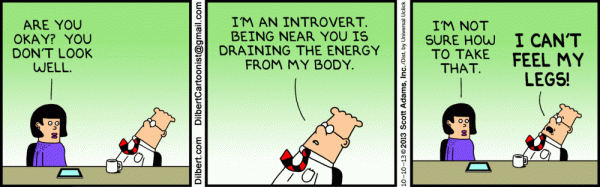
With 33-50% of humans being introverts, it's important to understand who we are, how to engage with us, and to give us the space we need to recharge.